Pesticide application records: recipes, dose and traceability
Close the loop on every application: recipe, work order, warehouse, real quantity and traceability per field.
- By Aragro Team
- Published
- 8 min read
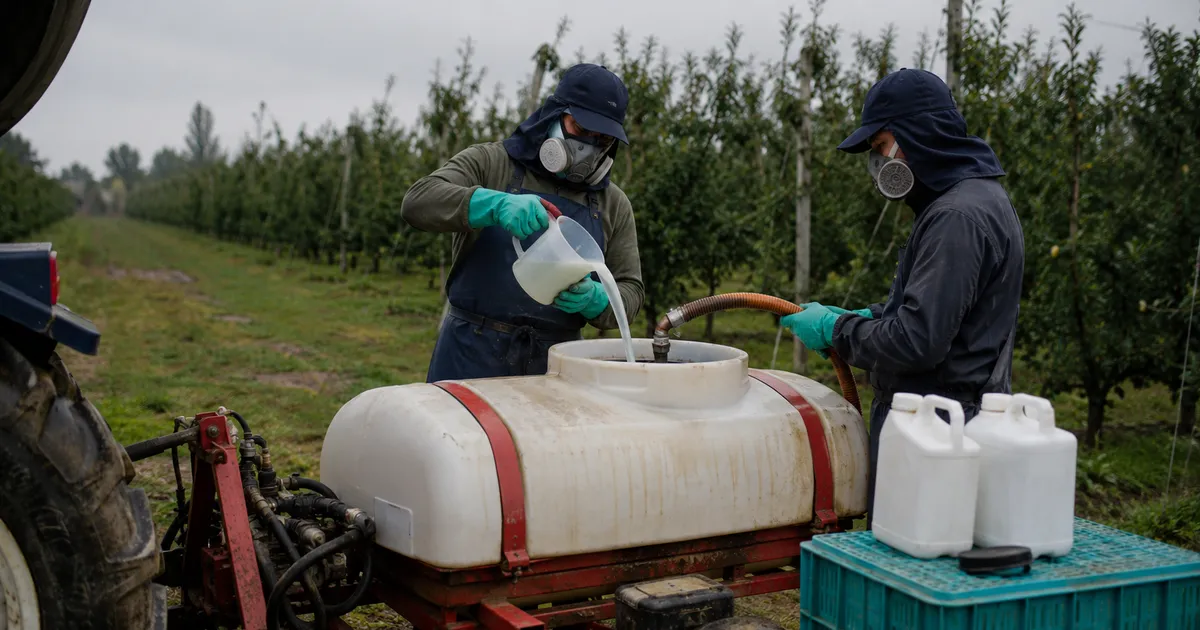
A pesticide application record is the proof of every treatment carried out on a field: which product was applied, in what quantity and at what real dose, when, against which target, with which equipment and by whom. It is what lets you reconstruct an application months later, when the warehouse does not reconcile or somebody has to explain the field's agrochemical cost.
What an application record contains
A complete record answers six things: where and when the product was applied, against what, with which product, how much, with which equipment and under whose responsibility, and what restrictions it leaves behind. The most widely used reference in Latin America is FAO's good agricultural practices manual for fruit and vegetable growers (2nd edition, Regional Office for Latin America and the Caribbean, 2012, Spanish only), whose application sheet (Annex 2, Sheet 14, pages 59 and 60) carries these columns:
| Block | Fields in Sheet 14 |
|---|---|
| Where and when | Plot or field number, date, crop and variety, growth stage |
| Why | Pest or disease |
| What | Product trade name, active ingredient |
| How much | Dose used, spray volume in liters |
| With what and who | Equipment used, operator, person responsible for the application and signature |
| Consequences | Pre-harvest interval, re-entry interval, probable harvest date |
The last block is the one most often skipped and the one that weighs most: the pre-harvest and re-entry intervals say when people may walk back into the field and when the crop may be picked. A record without them documents the application but not its consequences.
That sheet is not law. It is a good-practice guide written for smallholder horticulture, and the concrete obligations (what to keep, for how long, and for whom) are set by each country. On retention the same manual is explicit (page 47): farm records are what makes the product's history traceable, and for that reason they should be archived for at least three years. Use it as a reference floor, not as a legal answer.
Who sets the dose, and who does not
The dose is set by the label of the product authorized for that crop and that use; neither custom nor software has a vote there. FAO and WHO's International Code of Conduct on Pesticide Management (2014 revision) defines good agricultural practices in the use of pesticides as the uses officially recommended or nationally authorized, under existing conditions, to control pests effectively and reliably (article 2, page 3). The Code itself sets standards of conduct that are voluntary in character (article 1.1, page 1) and is meant to be applied within the context of national legislation (article 1.3, page 1).
Translated to the farm, the dose has three anchors and none of them lives in your spreadsheet:
- The label of the product authorized for that crop and that use. The Code asks industry and pesticide traders to provide information and instructions on each container in one or more of the country's official languages (article 3.5.4, page 9) precisely so they are usable in the field.
- A qualified technician's prescription, where local regulation or practice requires one.
- The national rules on registration, storage, re-entry and pre-harvest intervals.
This article recommends no rates and no tank mixes: follow the label and a qualified technician's advice.
The recipe: the plan you repeat
A recipe is the documented mix: the products and their rate expressed per unit of application, whether per hectare, per plant or per liter of spray. It is the agronomic decision the farm has already made, stored so nobody has to rebuild it every week.
Its value is not the data entry it saves. It turns a technical decision into something repeatable and auditable: the same mix at the same rate, applied by different people on different fields. What it is not is a prescription. The label still sets its limits.

From recipe to work order
A recipe moves no product. The work order turns the plan into an authorization: activity, field or fields, date, owner, crew, machinery and the inputs requested from the warehouse. It is the bridge between "this needs spraying" and "40 liters were authorized to leave for field 4".
| Field on the order | What it does for the application |
|---|---|
| Field or fields (cost centers) | Where it was applied and at what cost |
| Date and owner | Authorization and accountability |
| Crew and machinery | Who applied it and with what equipment |
| Inputs with planned dose | The request to the warehouse against that task |
| Spray volume and tanks | How much water to prepare and how much goes per tank |
Without an order, the warehouse slip floats: the product left, but nobody can prove for which field or under whose authorization. The general cycle (plan, order, execution, closing and cost) is covered in how to control field operations; what matters here is only what an application adds to that cycle.
The warehouse: request, apply, return
In an application, the warehouse cycle is what fixes the real dose: what leaves against the order and what comes back are the two numbers that say how much was actually applied.
- Request: the order asks for the planned quantities per field.
- Issue: the warehouse deducts stock against that order.
- Application: the crew records what was really used, not what the plan said.
- Return: the surplus goes back with its own entry.
- Reconciliation: for each product on the order, applied equals issued minus returned, and that applied total is distributed across the fields worked.
Skip step 4 and the inventory reconciles only on physical-count day: the "official" dose in the record becomes the planned one, not the applied one. The FAO manual also asks for a separate crop-protection product inventory (Sheet 13, page 59): what sits in the warehouse and what was applied are two different questions answered by the same cycle.
Traceability and cost per field
A properly closed application produces two things at once. Traceability: what was applied on each field, in what quantity, with which equipment and under whose responsibility. And cost: the reconciled consumption, valued at warehouse cost, lands on the field's cost center.
Without that link, a farm holds agrochemical invoices and cannot say which field consumed them. The invoice says how much was bought; the record says where it went. The full build-up of a field's cost (labor, inputs, machinery and overhead) is in how to calculate production cost per field.
How this works in Aragro
In Aragro the application lives on the work order, not in a parallel logbook.
Each product record stores what its label says: active ingredients with their concentration, toxicity category, re-entry interval, pre-harvest interval, required protective equipment, and the target pests or diseases. These are data you load and that Aragro keeps and displays; the system does not block an application or raise an alert on its own if the pre-harvest interval was not respected.
Recipes store products with their rate and application unit (per area, per plant or per volume of water) and are added to an order as one block. From there Aragro does calculate: it distributes the total quantity across the fields by area or by progress, and shows the required dose and the actual dose in whichever application unit the farm has configured, whether by area or by task progress.
For spraying it takes the spray volume per unit of area and the area or progress covered to obtain the total spray volume, divides that by the tank capacity to get the number of tanks needed, and splits each product's quantity across those tanks. It also proposes the protective equipment associated with the products you added.
That calculation is arithmetic over your data, and it is worth saying plainly: Aragro converts rates into quantities, but it does not validate that those rates are correct against the label, the agronomy of the crop or the country's regulations. That responsibility stays with the technician, the supervisor and the competent authority.
When the order starts, it triggers the inventory request; when it closes, it will not complete while inputs remain unresolved. The account closes per product on the order: consumed, summed across all fields, plus returned must equal issued. The return is recorded at order level, not per field; what does stay split by field is the consumption, and once the order is completed its cost is assigned to the cost centers of the fields worked.

Two things Sheet 14 asks for that the order does not solve on its own: the growth stage lives on the field's crop stage, and the detected pest lives in field scouting notes. If your record needs those two frozen alongside the application, write them into the order.
The product record with its safety data is available from the Seed plan; warehouse purchases and stock, from Growth; inventory requests against the order and the spraying module, from Harvest. See the product overview and plans and pricing for what each plan includes.
This text is general operational guidance, not legal or agronomic advice. Confirm recordkeeping, label and use requirements with the competent authority and a qualified technician before applying.
Frequently asked questions
What is a pesticide application record?
It is the record of each treatment applied to a crop: field, date, crop, pest or disease, product and active ingredient, dose and quantity used, spray volume, equipment and the person responsible. It supports traceability, warehouse control and cost per field.
What is the difference between a recipe and an application record?
The recipe is the plan made in advance: which products to apply and at what rate. The application record is what happened on the field: real quantities after returns, the people responsible and the equipment used. Planning does not replace recording what was executed.
Who defines the correct dose?
The label of the product authorized for that crop and that use, a qualified technician's prescription where local rules or practice require one, and the national regulations. This article does not recommend doses or tank mixes.
How long should application records be kept?
Each country sets the period. FAO's good agricultural practices manual for Latin America says farm records should be archived for at least three years because they are what makes the product's history traceable; treat that as a reference floor and confirm the local requirement.
Can Aragro record crop-protection applications?
Yes, through work orders: fields, crew, machinery, recipe, inventory request and return, real quantities per field and closing with assigned cost. Aragro calculates quantities from the rates you configure, but it does not validate that those rates comply with the label or with local regulations.