How to calculate production cost per field
Assign every production expense to its field and compare cost per hectare and per unit.
- By Aragro Team
- Published
- Updated
- 7 min read
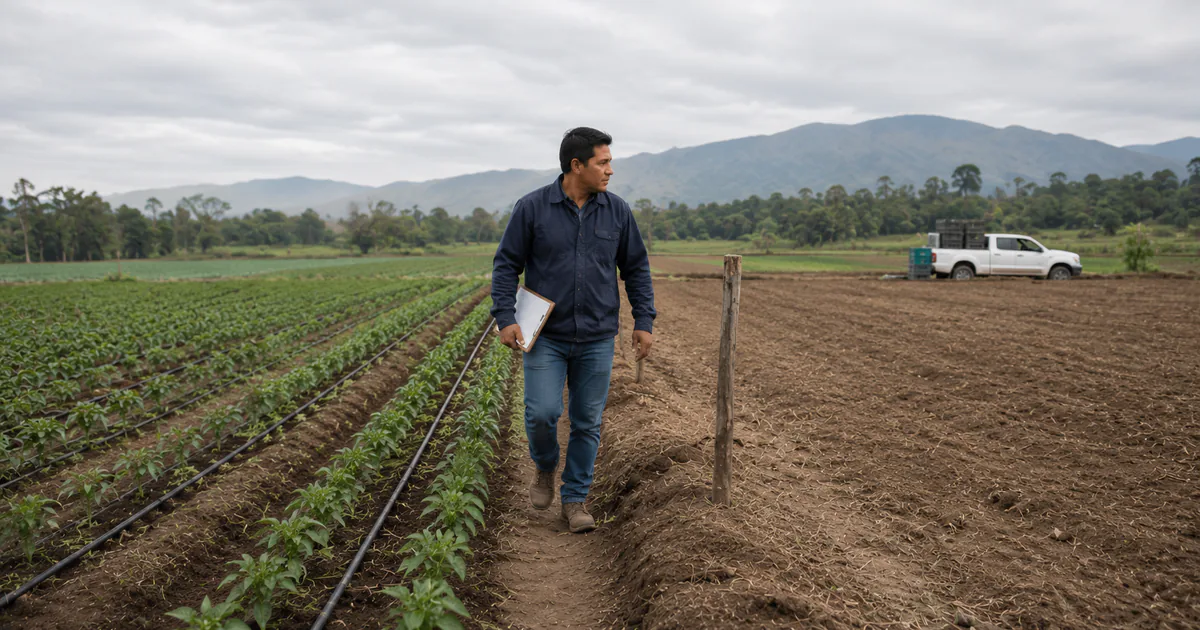
Production cost per field is the sum of labor, inputs, machinery and allocated overhead assigned to one field over a crop cycle, reported three ways: absolute, per hectare and per unit produced. Without it, the farm knows its overall spending but not which field earns money and which loses it.
Which costs belong in production cost
A complete production cost includes everything the field consumed, not only what the farm paid in cash. The FAO Handbook on Agricultural Cost of Production Statistics starts from a simple principle: measure every cost, purchased or owner-supplied, and if production needs it, put a value on it. That handbook calls farm-produced inputs and unpaid family work non-cash costs, and treats depreciation on owned machinery as a separate line. For managing a field, four categories are enough to start:
- Labor: day wages, piece rates and salaries for work done on the field, at full employer cost, not just net pay. How to run farm payroll explains the difference.
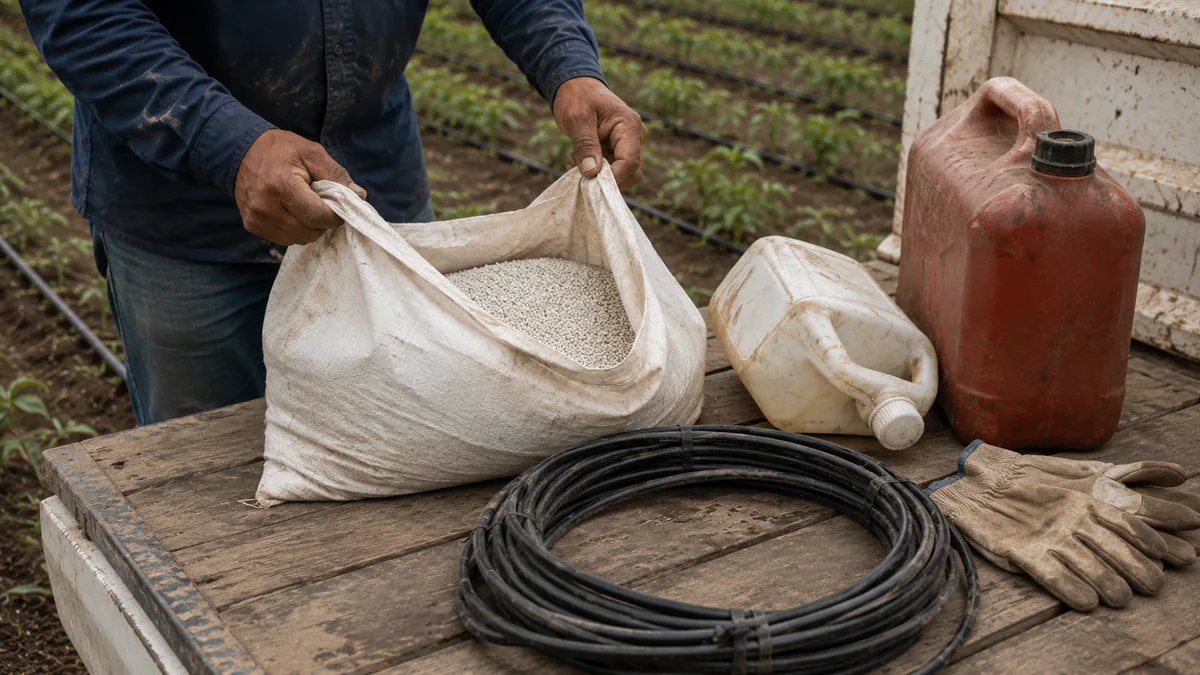
- Inputs: fertilizer, crop protection, seed and materials, priced at the warehouse cost of what the crew actually applied, not what the farm bought.
- Machinery: machine hours on the field, priced at an hourly rate that covers fuel, operator and maintenance.
- Allocated overhead: administration, security, shared irrigation and other services that belong to no single field.
The first three are direct costs: they attribute unambiguously to the field that consumed them. The fourth groups the indirect costs, which the FAO defines as costs that several production processes share and that no one product can claim unequivocally. Where each expense falls decides what you record directly and what you prorate. Labor tolerates a rough record least of all. Across the 1,283 coffee farms in the Costos de producción de café, Colombia 2024 study by the Acuerdo de Café, Bosque y Clima, harvesting alone accounted for 54% of cost per kilogram.
Formulas: per field, per hectare and per unit
Three figures answer three different questions:
Total field cost = labor + inputs + machinery + allocated overhead
Cost per hectare = total field cost ÷ field area
Cost per unit = total field cost ÷ units harvested
The total shows how much capital the field consumes. Cost per hectare is that total divided by the field's area: it measures investment intensity per unit of area and compares fields of different sizes. Cost per unit is the total divided by the units harvested, per kilogram, box or bag. That is the figure you set against the sale price, and it decides whether the cycle was profitable. Calculate all three per crop cycle, not per calendar year, so cycle-to-cycle comparison stays clean.
The two derived figures do not rank producing units the same way. In the Costos de producción de café, Colombia 2023 study, farms with more than 10 hectares in coffee spent COP 14,082,000 per hectare against COP 11,980,800 on farms under 5. They still produced more cheaply per kilogram: COP 8,590 versus COP 8,830. Read cost per hectare alone and you blame the wrong field, so the three figures belong together.
Worked example
A 2-hectare field over one full cycle:
| Category | Cost |
|---|---|
| Labor (employer cost) | 38,400 |
| Inputs applied | 21,600 |
| Machinery (hours × hourly cost) | 6,000 |
| Allocated overhead | 9,000 |
| Total field cost | 75,000 |
| Area | 2 ha |
| Cost per hectare | 75,000 ÷ 2 = 37,500 |
| Harvested output | 15,000 kg |
| Cost per unit | 75,000 ÷ 15,000 = 5.00/kg |
At a sale price of 6.50/kg, the field's margin is 1.50/kg before selling costs. The same structure on another field producing at 7.20/kg shows immediately where the problem is, even when both "look fine" from the road. Cost per unit connects directly to the harvest estimate: an inflated estimate hides a higher real unit cost.
Calculate your field
Enter the field area to get the cost per area unit.
Enter the harvested quantity to get the cost per unit.
Enter the field's costs to see the result.
Cost centers: assigning each expense to its field
A cost center is the account where everything a field consumes accumulates; every productive field should have its own. The operating rule is to assign the cost when the work happens: the recorded task names the field, and the day wages, piece-rate units, applied inputs and machine hours travel with it. How to organize that daily record (work orders, progress and returns) is the subject of how to control field operations; here the outcome is what matters: every completed task leaves its cost in the right field's cost center.
Assigning at month-end from memory or from invoices does not work: invoices say what the farm bought, not where the crew applied it, and memory averages things out. The FAO handbook treats this as part of the method rather than an operational detail: allocating costs gets easier as a farm's recordkeeping practices improve. Cost per field is only as good as the daily record feeding it.
Splitting shared and indirect costs
Part of the cost never belongs to a single field: administration, irrigation serving three fields, a crew task that moved through several fields in one day. To split it, choose an allocation basis and keep it for the whole cycle:
- By area: useful for stable general costs (administration, security). Each field takes its share of hectares.
- By hours worked: useful for shared tasks; the field where the crew spent more hours absorbs more cost.
- By progress or output: useful at harvest; the field that delivered more kilograms absorbs more of the shared task's cost.
No basis is "the correct one", and that is not a licence to improvise. The FAO states in its cost-of-production handbook that no "true" or "false" way to split joint costs exists. What the method always demands is two things: a uniform algorithm, and transparency about which one you used. What invalidates comparison is switching bases mid-cycle or leaving them undocumented. Note the chosen basis with the cycle's closing figures.
Common errors that distort the cost
- Omitting employer cost: counting only workers' net pay understates labor.
- Valuing inputs at the latest purchase price instead of the warehouse cost of what was applied.
- Ignoring non-cash costs: family labor and farm-produced inputs make fields look "cheap" when they are not.
- Mixing cycles: charging the new cycle for inputs the previous one consumed.
- Comparing different units: fresh kilograms against dried bags, hectares against manzanas, or different moisture bases, without a fixed conversion. Pick one area unit and one product unit, and keep them across cycles.
- Changing categories between cycles: if one cycle includes overhead and the next does not, the "improvement" is arithmetic, not real.
How this works in Aragro
In Aragro each field links to a cost center, and cost accumulates from the operational record: completing a work order pushes its labor, inputs and machinery hours into the cost centers of the fields it touched, splitting them by hours, by progress or by harvested output, depending on the task type. Completed payroll adds employer-side labor cost to the same work orders, and inventory prices the warehouse issues. The Field report totals those three recorded categories, labor, inputs and machinery, per field and per unit of area, ready to compare against recorded harvest.

The Field report covers the recorded operating cost; the method's allocated overhead, administration and general services, does not enter that report, and its proration remains your step. Aragro also does not estimate costs for tasks that were never entered. Availability of cost centers, payroll and budgets depends on the plan.
Create one cost center per field and start recording tasks against them. If you keep these costs in a spreadsheet today, when it pays to switch to cloud software covers the thresholds and how to migrate module by module. See the product overview and plans and pricing for availability.
Frequently asked questions
How do you calculate production cost per hectare?
Add every cost assigned to the field during the cycle (labor, inputs, machinery and overhead) and divide by the field's area: cost per hectare = total field cost ÷ hectares.
What is the difference between direct and indirect costs?
A direct cost belongs to an identifiable field, like the day wages for its weeding or the fertilizer applied on it. An indirect cost serves several fields or the whole farm, including administration, security and shared irrigation, and must be split using a defined basis.
How do I split a shared cost between fields?
Pick an allocation basis and apply it consistently: each field's area, the hours worked on each field, or the output each field delivered. Document the basis so cycles remain comparable.
How often should I calculate cost per field?
Record costs as they happen and review the running total at least monthly; the cycle's final cost closes with the harvest sold or stored. Rebuilding it at cycle end produces incomplete figures.
Can Aragro calculate cost per field?
Aragro calculates the recorded operating cost per field: completed work orders and payroll accumulate labor, input and machinery costs in each field's cost center, and the Field report shows them per field and per unit of area. The method's indirect costs are allocated outside that report.
How do you calculate cost per kilogram or per bag?
Divide the total cost assigned to the field for the cycle by the units harvested from that same field: unit cost = total cost ÷ output. Always use the same unit and the same moisture or quality basis.