Piece-rate pay in agriculture
Set defensible piece rates and record units without disputes, from field tally to payroll.
- By Aragro Team
- Published
- 7 min read
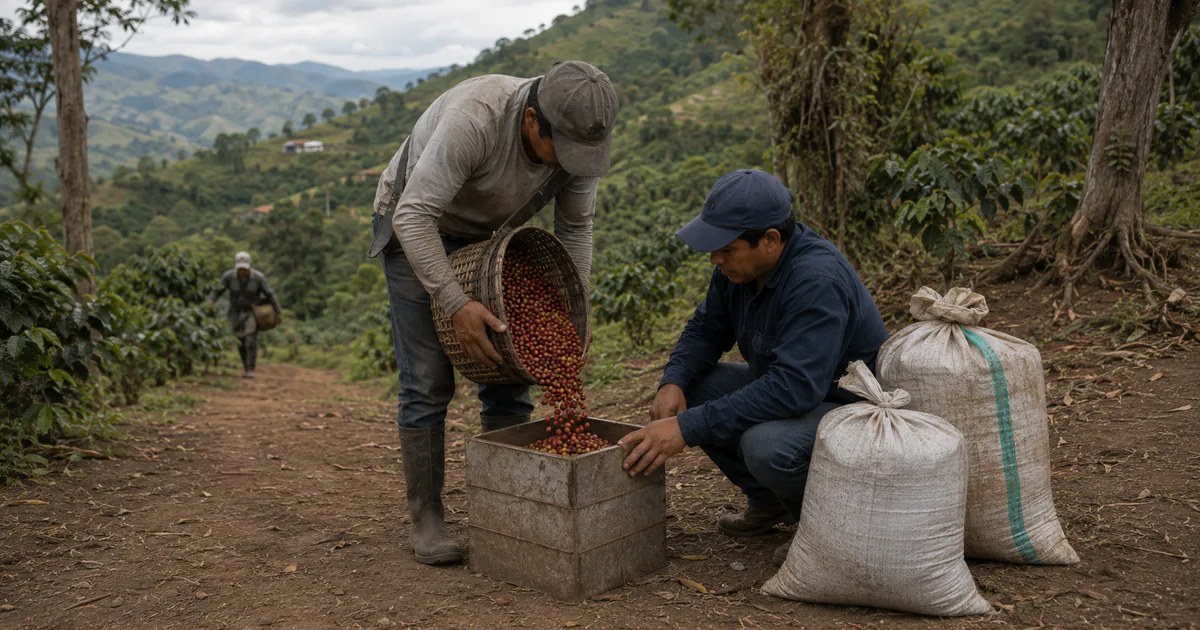
Piece-rate pay is wage payment for completed units of work, such as boxes picked, rows weeded or bags collected, instead of for time worked. Managed well, it aligns the worker's income with the task's progress; managed badly, it produces tally disputes, rates changed after the effort and quality sacrificed for speed.
What piece rate is and when to use it
Piece rate is pay per unit of work performed, in the ILO's definition, and the ILO lists agriculture among the sectors where it is common. Labor codes recognize it: Guatemala's labor code, for example, expressly allows pay "by piece, task, flat rate or piecework" (article 88). In farm practice it dominates wherever the unit is countable and individual pace matters: harvest, weeding by row, pruning by plant.
The practical rule: piece rate when you can count the unit and verify its quality at the work point; day wage when quality outweighs speed or the outcome does not depend on individual effort. Many farms combine both in the same week, and farm payroll must settle the two models together.
Research has measured what piece rate does to work pace. The University of California surveyed California grape growers about the 1990-1991 season and compared the two systems in pruning. In wine and raisin grapes, hourly-paid crews needed an average of 26 labor hours per acre; piece-rate crews needed 19, or 37% faster (Billikopf and Norton, California Agriculture 46(5), 1992). Pay method did not appear to affect the quality of the work for two thirds of the respondents, and the remaining third preferred the quality of hourly-paid work.
That speed gain is not automatic, though: growers' most common objections to incentive pay include poor-quality work, difficulty setting standards and excessive record-keeping (UC ANR, Labor Management in Agriculture, "Incentive Pay" chapter). Farms that sustain piece rate over time control quality as well as speed, and that control starts with how you set the rate.
How to set the rate per unit
A defensible rate starts from the target daily income, not from habit:
Rate per unit = target daily wage ÷ units an average worker completes in a workday
With a target day wage of 120 and an average output of 80 boxes per day, the rate is 1.50 per box. Three decisions accompany the formula:
- Measure average output under real conditions: the same crop yields differently with fruit load, slope and weather. A rate set on the best field punishes everyone else. Without a history to draw on, time the task yourself or pay a temporary crew an inflated rate purely to establish the standard. UC ANR warns that whoever will later do the work, or anyone with a stake in the result, must not run that trial.
- Define the quality standard with the rate: decide what counts as an "accepted" box (ripeness, cleanliness, fill level) beforehand, not at delivery.
- Check the legal floor: how the minimum wage applies to work paid by the unit is a local rule. The ILO describes three common approaches across national law. The piece rate may not fall below the applicable minimum wage, or the minimum is set against a production quota, or the law requires a fair wage for anyone paid by the unit. In Guatemala, for example, minimum-wage setting must expressly protect workers paid by piece or piecework (labor code, article 103). The risk is real: in the same vineyard survey, 8% of the growers paying piece rate had pay scales below the minimum wage, against 4% of those paying by the hour. Confirm minimums, paid rest days and premiums with the labor authority or an accountant.
Adjust the rate when conditions change, such as at the start or peak of harvest or for a difficult field, and agree on it before work starts. The rule cuts one way only: once you set the standard you may loosen it, never tighten it. UC ANR records the case of a grower who cut the rate after the crew earned more than he expected; he lost credibility, morale collapsed and many workers left. Changing the rate once you know the output destroys the trust that makes the model work.
Calculate piece-rate pay
Complete all five values to see the comparison.
Recording units without disputes
Piece rate is won or lost in the record. A workable tally meets four conditions:
- At the work point: the checker counts, weighs or measures the units where the crew produces them, with the worker present.
- Per worker and per task: each record names who, which activity, on which field and how many accepted units.
- With a receipt: the worker gets proof of the day's tally, and both sides clear up differences the same day rather than at payout.
- With the rate fixed in advance: the record stores the rate in force at the time of work, so the settlement stays reproducible even if the rate changes later.
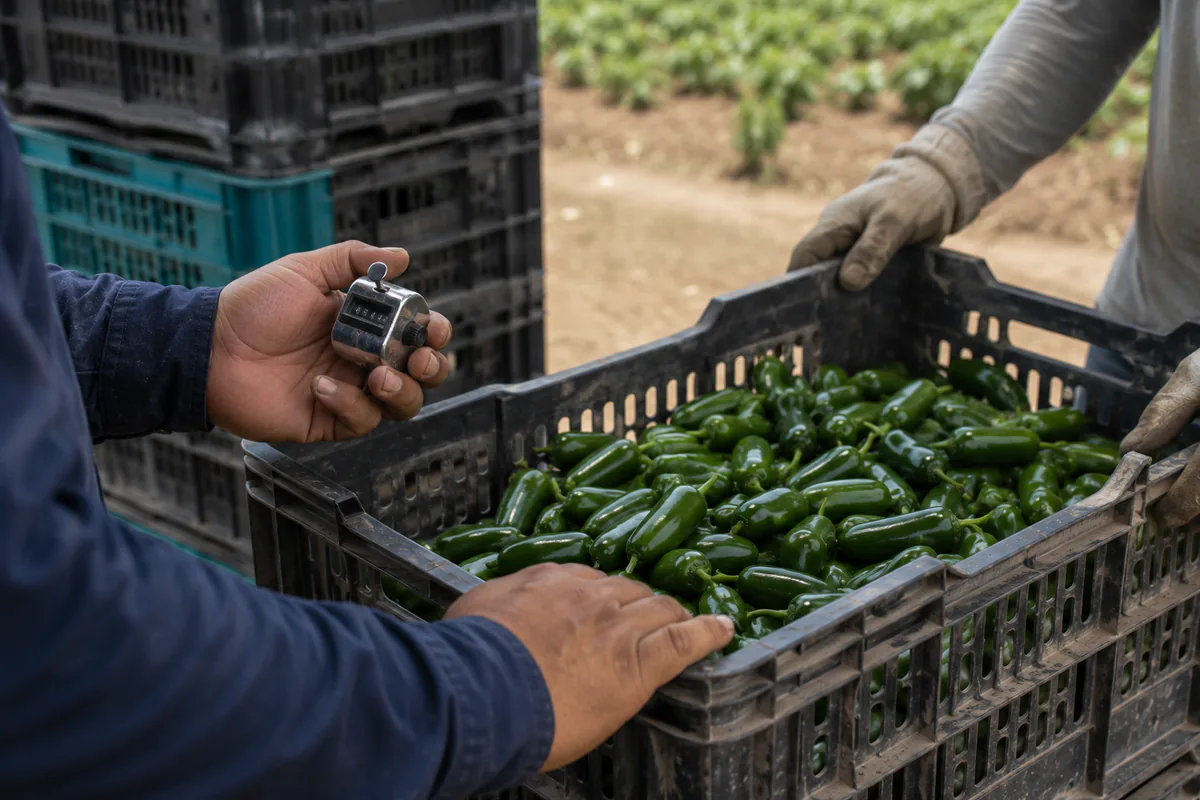
This same record feeds two immediate outcomes: the worker's pay and the field's labor cost, covered in how to calculate production cost per field. Over a longer horizon it feeds a third: the output history you will set next season's rates from. UC ANR puts it plainly: keeping performance records establishes the base lines a farm needs for setting future standards, whether or not it pays an incentive.
From units to pay and to cost
The period's settlement gathers the daily records:
Gross pay for the period = Σ (accepted units × the rate in force for each task)
The locally applicable rules are then applied to that gross: mandatory bonuses, paid rest days, social-security deductions and whatever wage floors local law provides. In Guatemala, for example, a worker paid by unit of work receives an extra one sixth of the week's earnings for the weekly rest day (labor code, article 126). A worker can accumulate day wages on one task and piecework on another in the same week; the settlement adds them separately and presents them on one payslip.
For the farm, the same calculation at full employer cost is the labor cost that lands on the field and activity where the crew produced the units.
Benefits, risks and mitigations
| Risk | Mitigation |
|---|---|
| Quality sacrificed for speed | Quality standard agreed in advance with the rate; rejections recorded and resolved with the worker the same day |
| Tally disputes | Counts accepted at the work point with a daily receipt |
| Rates perceived as arbitrary | Known rate formula; average output measured and communicated |
| Earnings below the legal minimum | Check at every settlement of the local minimum-wage rule that applies to piece rate |
| Pressure on slow or new workers | Training on a guaranteed day wage until the worker masters the quality standard, and only then a move to the piece-rate crew (practice documented by UC ANR) |
How this works in Aragro
In Aragro, you configure piecework as per-activity payment rules: each rule sets the rate per unit tied to a metric (boxes, kilograms, rows) and can be segmented by position, farm or crop. On the work order, the supervisor records units per worker; Aragro calculates the pay (units × rate), surfaces it in the pre-payroll report for review, and settles it in payroll together with day wages and salaries. When the order and payroll complete, the cost lands in the field's cost center.

Aragro records and calculates; it does not move money and does not by itself verify your country's legal minimums. That validation belongs to your payroll review. Piecework wages depend on the plan.
Define the unit, rate and quality standard for your next harvest task, and record units per worker from day one. If that tally lives in a spreadsheet today, when it pays to switch to cloud software reviews the thresholds. See the product overview and plans and pricing for availability.
Frequently asked questions
How is piece-rate pay calculated?
Multiply completed, accepted units by the agreed rate per unit: gross pay = units × rate. Locally applicable bonuses and deductions are then applied to that gross.
How do you set a fair piece rate?
Start from the target daily income and divide it by the units an average worker completes in a workday under the field's real conditions: rate = target day wage ÷ units per day. Revise the rate when conditions change, not after the output is known.
Does piece rate have to respect the minimum wage?
It depends on local law. The ILO describes three common approaches: the piece rate may not fall below the applicable minimum wage, the minimum is set against a production quota, or the employer owes a fair wage to anyone paid by the unit. In Guatemala, for example, the minimum wage must be set so that workers paid by piece, task or piecework are not disadvantaged (labor code, article 103).
What units work best for piece rate?
Units that are countable and verifiable at the work point: level boxes or buckets, weighed kilograms, finished rows or plants with a defined quality standard. An ambiguous unit is the main source of disputes.
How do you avoid tally disputes?
Count and accept units with the worker present at the time of work, hand over a receipt, and resolve differences the same day. A tally reconstructed at week's end is no longer verifiable.
Can Aragro calculate piece-rate pay?
Yes. Aragro stores per-activity payment rules with a rate per unit, records units per worker on the work order and calculates the pay, which flows into pre-payroll and field cost. Aragro does not move money: the farm executes the payment.
When is piece rate better than a day wage?
Piece rate when the unit is countable, quality is verifiable and pace depends on the worker: harvest, weeding by row, pruning by plant. Day wage when quality matters more than speed or the outcome does not depend on individual effort.